The Cove – Academy Award 2010 – Best Feature Length Documentary

My good friends Kirk and Mandy, who I teach freediving with every now and again, did a top-secret project a few years ago, and yes, it was this film. If you don’t remember, it was the film about the cover in Japan where they capture dolphins for dolphin shows and slaughter the rest. It was produced by the Ocean Preservation Society, directed by Louis Psihoyos, and funded by Jim Clark (of Netscape fame).

You can find plenty of clips and trailers for the movie online. They needed Kirk and Mandy to (1)freedive with dolphins and whales and (2)set up some hydrophones at the bottom of the eponymous cove, and freediving was the quickest was to do it.

the-cove-movie


DVD on Amazon
Blu Ray DVD on Amazon
Instant Movie on Amazon

The Infinite Emotions of Coffee (and Chocolate)

Last year I attended a coffee tasting at Google Research. It was hosted by Alon Halvey. He was once CS professor at University of Washington, and now is at Google. He also like coffee. A lot. His website is http://www.macchiatone.com, because he thinks a macchiatone is a the best coffee drink. It is somewhere between a cappuccino and a macchiato (in terms of the amount of milk).

I think Alon likes the macchiatone in the way that I like dark milk chocolate (I made that term up). Milk chocolate can indeed by cloying and too sweet, but dark chocolate can be overwhelming and bitter. Some chocolate companies have started making a new kind of milk chocolate that has a high % of cacao and just a tiny bit of milk to take the edge off. It’s like a cup of tea with one teaspoon of sugar instead of 16 (I think that’s about how many are in a bottle of Snapple).

Alon’s book is an account of his coffee philosophy and travels. The book jacket has a review by Vincent Cerf!

In future, I’ll probably be writing more on tea and chocolate, because I know those things better.

Paperback on Amazon

Kindle on Amazon

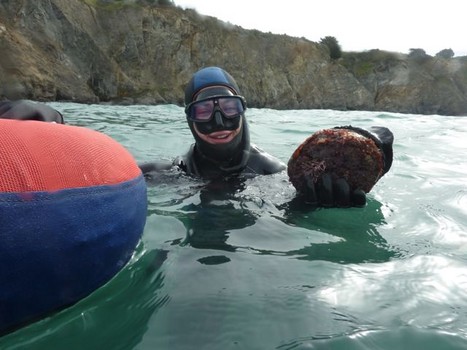
Our First Live Event is Tonight! Northern California Seafood Foraging @Stanford Th Feb 21 6PM

Northern California Seafood Foraging @Stanford GSB Th Feb 21

Mendo21_1200 diver snorkel

Please join Local Food Lab and Stanford GSB Farm Club for a presentation on seafood foraging on the Northern California coast. The presenters will discuss breath hold freediving for abalone and urchin, digging/trapping crabs, clams and other invertebrates, and collecting seaweed. Other forms of foraging, such as mushrooming, will be discussed briefly.

Presenters will include: Kacie Loparto of shesellsseaweed.com

Robert Lee, Research Fellow at Stanford and instructor with Performance Freediving, www.fl0wstate.com/robert/

The presentation will be Th Feb 21, 6-7:30PM at Stanford Graduate School of Business, C105 (Class of 1968 Building, Room 105). Parking is free after 4PM. The business school has an excellent eatery on site if you want to get food before the event.

www.gsb.stanford.edu/about/directions.html

There will be foodie give aways as well!

abalone diver


Laptop Backpacks – Incase CL55412 Heathered Backpack

Earlier this month, Square (Jack Dorsey’s credit card company) had a tech talk/recruiting event on campus. Not surprisingly, these tech companies are very keen on hiring Stanford CS students, so they’re throwing all sorts of events on campus. Square gave me this excellent backpack for helping to recruit students to the event.
DSCN0347

This really is an excellent, excellent laptop case, great for biking around campus or riding the bus. It is large enough for 17″laptops like the MacBook Pro, with two large compartments, and many distinct, easy to access pockets for notebooks, phones, accessories, etc. It is incredibly handy and easy to use, and retails for about $100. I can’t recommend this backpack enough, and many other online reviewers, such as TechHive, agree.


Incase Heathered Backpack on Amazon


< Back to Holo-kai

The Perfect Pushup

The fitness industry is rife with fads, whether they be products (e.g., the thigh master) or exercise trends (Zumba, Taibo, etc.). I don’t think trends are entirely bad. There’s nothing wrong with seeking a variety of fitness and exercise modes, as long as you don’t think the latest one is the be all and end all of exercise modes, instead of a way of just introducing some variety. Nonetheless I am wary of the trends in fitness, since they are mostly a way of creating change for the sake of change, much like the fashion system.

One trendy fitness product that I think is very innovative and useful however, so much so that I paid the premium to buy the product early on, is the Perfect Pushup and its variants. There was a major TV infomercial campaign for the Perfect Pushup a few years ago, and while I didn’t order from TV, I went to a sporting goods store a few weeks later and purchased them.

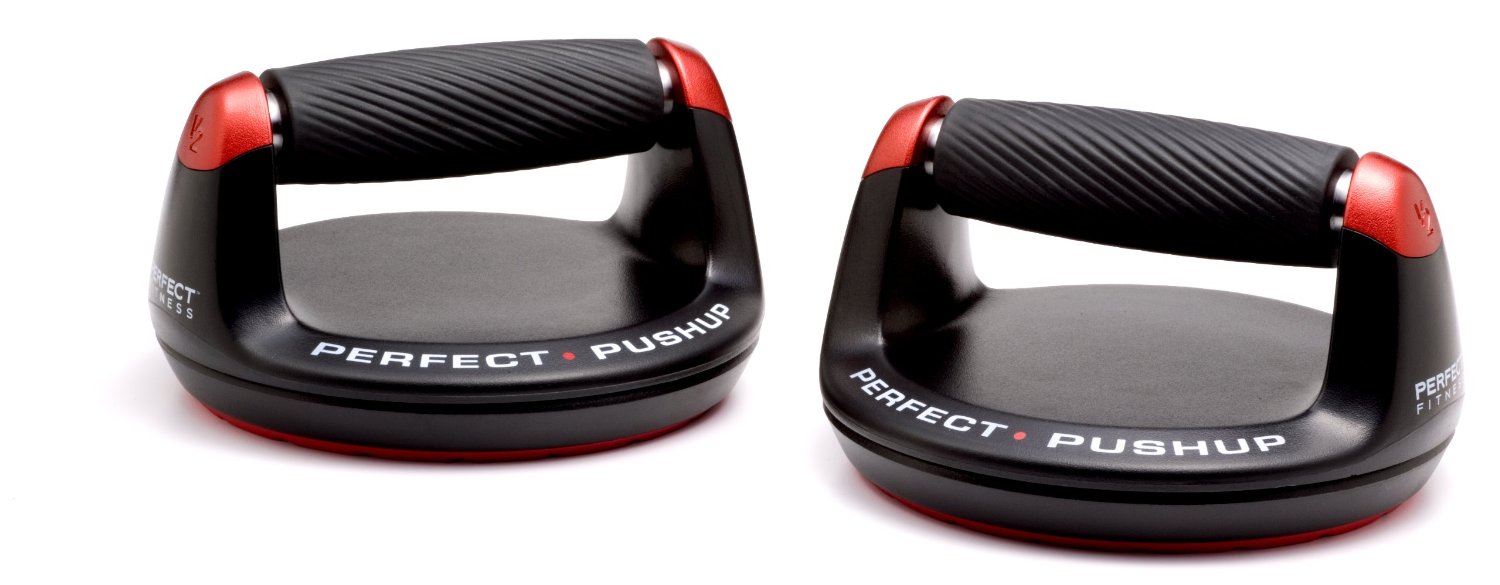
perfect pushup

The PP is a set of two pushups handles that allow you to rotate your shoulders in the anterior direction as you do the pushup. Because of the anatomy of the shoulder, full arm extension require anterior shoulder rotation. Even with regular pushups and bench presses, you do a slight anterior shoulder rotation as part of the proper form of doing the exercises. The PP takes this to the next logical step, allowing for much greater rotation. It also allows you to engage your lats and other muscles groups that are hard to recruit when doing conventional pushups. The Perfect Pushup and its imitators generally run about $30.

I can attest that after two months of using the PP about twice a week, I was able to do 20 one-arm pushups with either arm (I had previously been able to do only a few). I think that’s a great testimonial.

Perfect Pushup Version 2 on Amazon

Perfect Pushups Travel Version Amazon

Various Perfect Pushup Versions on Amazon

Immersion Blenders / Stick Blenders – Breville BSB510XL

Immersion Blenders, also called Stick Blenders, are hand held blenders that you stick into the food you are preparing, rather than the other way around (i.e, a traditional blender).

breville

Immersion blenders started to become popular among the 20-something singles crowd early in this century. This demographic tended to not have the space for or  the interest in having a traditional blender. But these people were really getting into smoothies, and wanted to prepare some for themselves in order to save money. Stick blenders really are the perfect device for making smoothies. Throw your frozen fruit, juice, yogurt, etc., into a large cup, insert the immersion blender in the cup for a few seconds, and you’ve got yourself a smoothie!

Immersion blenders are also good for pureeing soups and a variety of other tasks. They are definitely a good entree into the blender universe. And you don’t need a powerful stick blender power to prepare smoothies and soups– a basic model will do. Alton Brown and Tim Ferriss are among the well-known proponents of the immersion blenders.

Tim Ferriss prefers Breville, specifically the Breville BSB510XL Control Grip Immersion Blender.

This blender is definitely powerful enough for almost any kitchen task. The blade portion is detachable from the handle, and the bowl attachment works well for blending and storing the stick blender up right. The design gives it a power tool kind of feel. This is a very good medium-to-high end purchase for immersion blenders (about $100).

Alton Brown likes to use Kitchen Aid stick blenders on his TV show. These are decent products to start with, and worked well for us. However, we have heard some design complaints, most notably that food tends to get stuck in the cracks and seals in the bowl, and that the blenders are less than durable.

The KitchenAid KHB2351CU 3-speed Immersion Blender is less than $100, and has a variety of different blade and whisk attachments that can go with the handle. It comes with a carrying case for all these parts. We found the large variety of attachments to be a bit confusing, however.

The KitchenAid KHB1231CU 2-speed Immersion Blender is a simpler model without all the attachments, for less than $50.

For a very simple model, one speed with no attachments, we like the Cuisinart CSB-76 SmartStick 200-Watt Immersion Hand Blender, also less than $50.

Breville BSB510XL Control Grip   ~ $100 on Amazon

KitchenAid KHB2351CU 3-speed   ~ $100 on Amazon

KitchenAid KHB1231CU 2-speed   ~ $100 on Amazon

Cuisinart CSB-76 SmartStick   ~ $100 on Amazon


Bandages Not Included!!

Beware! The blade in the bottom of a stick blender is sharp, and rotates very fast. It can cut you badly. The New York Times has an article on this, titled Bandages Not Included. Would you stick your hand in a lawn mower to remove some grass without unplugging it? The same goes for removing a sprig of mint from an immersion blender, especially since they generally have very sensitive triggers buttons. For those models with detachable blade portions, you can remove this half from the handle top (which has the motor) instead of unplugging it, which is a bit much more convenient. I find this to be a more important convenience feature than the actual interchangeability of blades.


Aeris Velocity Full Foot Scuba Fins

Being a freediving instructor, you might guess that I am somewhat thoughtful about the fins I use for diving and snorkeling. This is certainly true, and for serious freediving, I can tell you a lot about the souped-up, $600 carbon fiber fins with all the bells and whistles. And while these fancy fins do have their place, for general snorkeling and diving, simple is just fine, if you know what to look for.

fins

The most important feature with respect to a fin is the FIT. A cheap fin that fits your foot well is much better than the latest multi-hundred dollar dive techy product if it doesn’t fit well. Imagine running in fancy fitness shoes that don’t fit. You wouldn’t do it, and the same goes for fins. The fit is the interface between your foot and the fin, and this is what matters, because that is how energy is transferred from leg to fin. This energy transfer is also why a simple fin with a foot pocket is better than a buckle on fin (designed to go with dive boots). Remember to account for the appropriate thickness of fin sock when trying a fin for fit.

A word about split-fin technology. I don’t think the feature is worth the price. Split fins seems like an invention for the gear heads, as a way of justifying a $100+ price for an item that should cost you less than $50. It is true when you start kicking with a split-fin, particularly from a stand still, the kick does seem to be more comfortable. This is because the split in the fin is giving way, so that it doesn’t bend your ankle as much. However, this benefit comes at the expense of power. The split-fin can make a session of kicking more comfortable, but because of the split, when you need power, it will be hard to get it. You can check the net for countless stories of people getting caught in currents and being unable to escape because of the lack of power in split fins (which is inherent in their design).

Because of the additional stress/ankle extension that comes from kicking from a stand still, I think it is perfectly fine to have a small amount of split in a fin, to make the initial kicks easier. Another good solution I have seen for this are the small vent holes in the Aeris Velocity Full Foot Scuba Fins. I highly recommend them. They are light, cheap, simple fins, and the small vent holes work well for making it easier to kick. I have done many freedives of more than 100 feet (30m) in them, which I think is a great testimonial. Keep it simple.

Another related tip, which not too many people are aware, of is the use of an item called the Fin Keeper. They are great for snorkeling or diving. Fin keepers are cheap rubber straps that hold the fin onto your foot, kind of like large rubber bands. If you have them on, the fins will stay snug on you feet, and they won’t fall off. This is particularly useful if your fin is a tad too large.

Finally, good Fin Socks are a must for keeping your feet warm and protecting your feet while walking on rocks.

Aeris Velocity Full Foot Scuba Fins $25-50 on Amazon

Trident Fin Keepers ~ $6 on Amazon

Tilos Fin Socks ~ $15 on Amazon

The Underachiever’s Manifesto (2012) – Ray Bennett

The Ten Principles of Underachievement

1) Life’s too short
2) Control is an illusion
3) Expectations lead to misery
4) Great expectations lead to great misery
5) Achievement creates expectations
6) The law of diminishing returns applies everywhere
7) Perfect is the enemy of good
8) The tallest blade of grass is sure to be cut
9) Accomplishment is in the eye of the beholder
10) The 4-per-cent value added principle.

Somehow this book fits into the whole intersectional design philosophy. Especially numbers 6 and 7 from above. This book is a wonderful little monograph from Chronicle Books. Some more:

[A group of students] asked two of the richest men in the world, Bill Gates and Warren Buffet, what they felt was the biggest single factor in their success. Their reply? Being born and living in America. They didn’t have any control over either. It’s a lot like saying that the best way to succeed in life is to choose your parents well. You didn’t choose them, or your genes, or a multitude of other factors that have had an enormous impact on your life. So why put all that pressure on yourself to succeed just because you were given a great mind or superb physical talent? And if you don’t have those things, well…it wasn’t your fault in the first place.

Hardcover (only edition) on Amazon

> Next Book
< Back to Reading List

Capitalism, Socialism and Democracy (1950) – Joseph Schumpeter

In this book, Joseph Schumpeter coined the term “creative destruction”. ‘Nuff said.

Paperback on Amazon

And to recap, the other books in the Design and Innovation reading list are:

< Back to Reading List

The Black Swan (2007) – Nassim Nicholas Taleb

Economist and hedge fund manager Taleb explains that rare, outlier events are not as rare would like to believe, and have such a disproportionate impact that almost nothing else counts, no matter how large a sample of the non-outlier events we see Therefore we should cultivate positive ones (see discussion of the British Spitfire in Adapt) and guard against the negative ones (the 2008 financial crisis). Rational Wiki does a good job of explaining that a black swan event from the book has three properties:

Rarity

The black swan is a rare event. It lies outside the realm of common experience and nothing in our past experience points to its possibility. A black swan is that million-to-one chance that statisticians said would never happen because it was a million-to-one chance. Of course, million-to-one chances happen 9 times out of 10.

Extreme impact

When the black swan strikes, it has a massive impact. It is two of the world’s tallest buildings being destroyed, it is a stock market crash that wipes out billions, it is a tsunami or earthquake over a major city. Not only is the qualitative nature of the black swan outside our regular experience (meaning we can’t see it coming), so is its sheer size — a single event can dominate over all other factors.

Retrospective predictability

This property explains the concept of “black swan blindness” or “black swan denial”. It is the illusion that we can actually see things coming. This is because of the narrative fallacy; our ability to construct a sensible story using only the pertinent information, happily discarding the information that wasn’t actually useful in the end. This can only be done with the benefit of hindsight — failing to understand this makes you more vulnerable to their effects.

Rational Wiki goes on the why Gaussian statics betrays us as a model when we rely on it most:

An important point of Taleb’s is his criticism of the usage of “Gaussian” normal distributions as the backbone of statistical modelling when applied to phenomena that do not seem to follow such a distribution and are instead skewed by rare, but massive outliers. He comes up with the concepts of “Mediocristan” — the realm of properties that are Gaussian in nature, like people’s weight or height — and “Extremistan,” where properties like a person’s fortune, market behaviour or success in intellectual or artistic professions are unevenly distributed, and the inclusion or exclusion of one extreme outlier can massively change the overall picture.

This can be best visualised with a quick thought experiment. Take 100, or even 1000 people and compare their heights. Even adding in Robert Wadlow, the tallest man ever recorded, and his massive 2.72 meter frame he would only take up 0.17% of the total height and would barely skew the average by a single percent. However, if you took 100 or 1000 or even 10,000 people, compared their wealth and added Bill Gates’s amassed fortune he could easily dominate the group, holding 99+% of the money in the group. As Taleb notes when discussing this particular thought experiment in The Black Swan, the other thousands in the group barely represent a rounding error in Bill Gates’s personal fortune, or the average daily change due to random economic fluctuation. It’s this particular property that leads Taleb to conclude that history doesn’t just feature black swan events, but is controlled and shaped by them almost exclusively, with the little accumulative changes making little impact in the grand scheme of things. In Extremistan, a single outlier can absolutely dominate the group as a whole.

Links below are to second edition – 2010

Paperback on Amazon

Kindle on Amazon

Also see Taleb’s recent book Antifragile

Paperback on Amazon

Kindle on Amazon

> Next Book
< Back to Reading List